
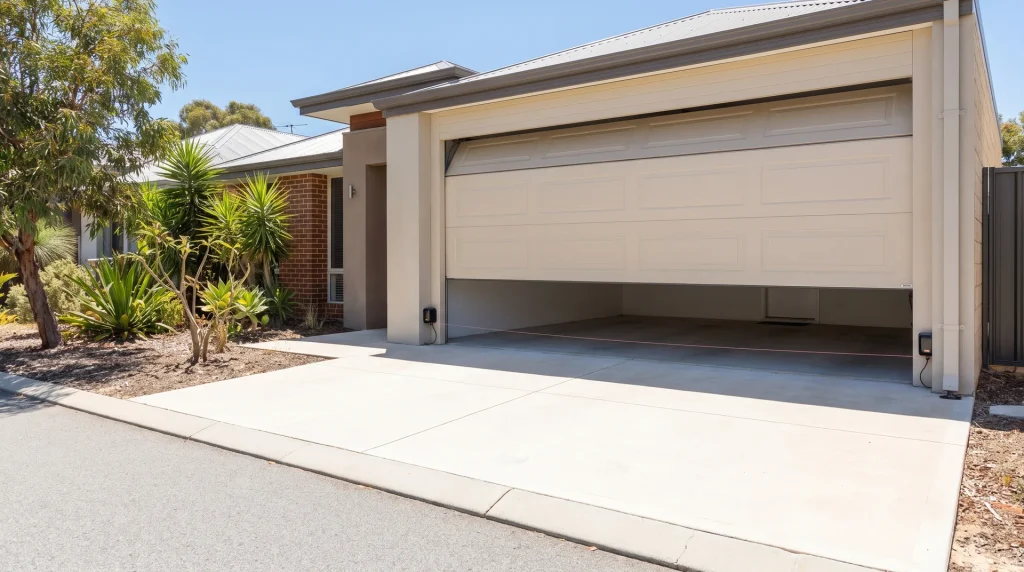
Picture a typical weekday afternoon in a busy Perth home. The car pulls in, school bags spill out, the dog bounces around the driveway, and someone hits the remote without a second thought. The garage door rolls up and down several times a day, often with little ones underfoot. It’s easy to forget that this is the biggest, heaviest moving object most families own. While households can learn safe habits, any mechanical fault should always be handled by the garage door repair experts Perth so the door stays safe to operate around children and animals.
This guide focuses on the people and pets in your home rather than the parts inside the door. Think of it as a household safety routine you can build into everyday life.
Prefer to watch or listen?
Listen onApple Podcasts
Why Garage Doors Pose a Unique Risk
Most household hazards stay in one place. A hot stove, a swimming pool, a flight of stairs — they don’t move toward you. A garage door is different. It travels along a track at speed, carries serious weight, and operates on command from buttons and remotes that children find fascinating.
That combination of movement, weight and easy operation makes it a genuine concern in family homes. A door that closes while a child is reaching for a dropped toy, or a pet that darts through the gap at the wrong moment, can lead to a frightening situation in seconds. Treating the door with the same respect you give a pool fence or a kitchen stove is the right starting point.
Teaching Children Safe Behaviour
Children learn habits quickly when the rules are clear and consistent. The goal is to help them see the garage door as something that adults operate, not a toy or a game.
- Stay clear of the door path. Teach kids to stand well back — ideally indoors or to the side — whenever the door is moving.
- Never play with wall buttons or remotes. Pressing the button to watch the door go up and down might seem harmless, but it removes the door’s predictability for everyone else.
- Never run under a closing door. The temptation to beat the door is strong for children. Make it a firm, non-negotiable rule that nobody runs under a moving door.
- Wait for the door to stop completely. Children should only walk through once the door has fully opened and stopped.
Repeat these rules often and model them yourself. Kids copy what they see adults do far more than what they’re told.
Keeping Pets Safe
Dogs and cats don’t understand that a closing door won’t wait for them. A dog that has learned to greet the car may bolt under a half-closed door, and cats often slip through narrow gaps without warning.
Where possible, keep pets indoors or in a secured area while the door is in motion. If your dog races to the garage at the sound of the car, consider training a “wait” command and rewarding calm behaviour away from the door path. Be aware of triggers too — the noise of the motor, the sight of family arriving home, or another animal in the street can all prompt a pet to dash at the worst moment.
Securing Remotes, Keypads and Wall Controls
A remote left in a child’s reach is an invitation. Small hands love buttons, and a remote in a toy box or a low drawer can turn into an accidental hazard.
- Keep remotes in a car or stored up high, out of sight and out of reach.
- Mount wall control panels high enough that young children can’t operate them — well above their natural reach.
- If you use a keypad, avoid sharing the code with children who are too young to understand the responsibility that comes with it.
- Check that visiting kids and guests know not to touch the controls.
Warning Signs the Door Is Becoming Unsafe
A door that no longer moves smoothly is a door to watch closely, especially with kids and pets around. Pay attention to changes in how it behaves day to day.
- Jerky, uneven or hesitant movement as the door travels.
- Grinding, scraping or unusual noises that weren’t there before.
- The door failing to stop or reverse when something is in its path.
- The door drifting closed on its own or feeling unusually heavy.
- Slow or inconsistent response to the remote or wall button.
If you notice any of these, treat the door as unsafe to use around the family until it’s been checked. A door that won’t reverse reliably is a particular concern in a home with small children. Understanding how your door should feel when it’s working properly helps here — our guide on garage door balance testing explains what smooth, well-adjusted movement looks like.
Building a Household Safety Routine
Safety becomes second nature when it’s part of a routine. Set a few simple house rules everyone follows: only adults operate the door, everyone stands clear while it moves, and nobody walks through until it has fully stopped.
Do a quick visual check from time to time. Watch the door open and close once and listen for new noises or hesitation. A monthly habit takes a minute and helps you catch changes early.
When something feels off — the movement, the sound, or the way the door responds — it’s time to call a professional for an inspection. Mechanical faults sit outside what families should try to fix themselves, and a trained eye can confirm the door is safe to operate around your children and pets.