
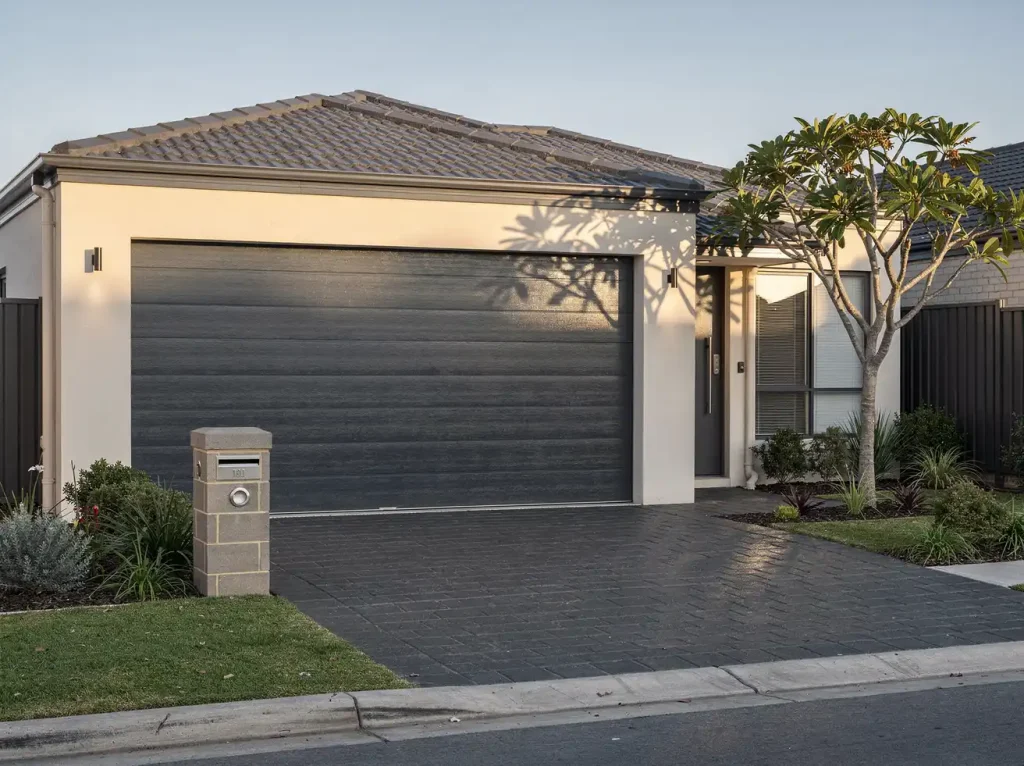
Notice your garage door growing stiffer, or orange specks creeping across the tracks and hardware sooner than you’d expect? If you live near the water in suburbs like Scarborough, Cottesloe, Hillarys or Fremantle, salt-laden air is the likely culprit. Sea breezes carry fine, corrosive particles inland, and they settle on every exposed metal surface of your door. While regular cleaning and care slow the process, corrosion that has already set into springs or cables usually needs professional garage door repair Perth attention before it causes a failure.
Prefer to watch or listen?
Listen onApple Podcasts
How Salt Air and Humidity Speed Up Rust
Rust is the result of iron reacting with oxygen and moisture. Salt makes that reaction happen much faster. Airborne salt is hygroscopic, meaning it draws water out of the air and holds it against metal surfaces. So even on a dry day, a thin, damp, salty film sits on your springs, tracks and fasteners.
Perth’s coastal humidity adds to the problem. Overnight condensation combines with settled salt to keep components wet for hours. The closer you are to the beach, the heavier the salt load and the quicker corrosion appears. Homes a few streets back still feel the effect, just at a slower pace.
Which Parts Are Most Vulnerable
Not every component rusts at the same rate. The parts under tension or in constant motion tend to suffer first, because rust doesn’t just look ugly on these pieces, it changes how they perform.
- Torsion and extension springs: These carry enormous load. Surface rust pits the steel, weakens it, and can lead to sudden breakage.
- Lift cables: Fine steel strands corrode from the outside in, fraying and losing strength.
- Tracks: Rust roughens the running surface, so rollers drag and the door binds.
- Rollers and bearings: Corroded bearings seize, forcing the motor and other parts to work harder.
- Fasteners and brackets: Bolts and hinges rust and lose grip, loosening the whole assembly.
- Steel panels: Chips or scratches in the coating let salt reach bare steel, causing bubbling paint and streaking.
Coatings, Lubrication and Material Choices That Resist Salt
The first line of defence is keeping bare metal covered. Powder-coated or galvanised components hold up better in marine air than untreated steel. Where the factory coating is intact, leave it alone; where it’s chipped, touch it up promptly so salt can’t get underneath.
Lubrication does double duty on the coast. A quality garage door lubricant reduces friction and forms a protective barrier that displaces moisture from moving parts. Use a product designed for garage doors rather than a thin general-purpose spray, which washes off quickly. Apply it sparingly to springs, rollers, hinges and the pivot points, and wipe tracks clean rather than greasing them so grit doesn’t stick.
When parts eventually need replacing, ask about corrosion-resistant options. Stainless or galvanised hardware and nylon rollers all cope better with salt than standard steel.
A Rust-Prevention Routine for Coastal Homes
A short, consistent routine does far more than an occasional deep clean. The goal is to remove salt before it has time to work.
- Wash down the exterior: Rinse the door face and lower tracks with fresh water to lift salt residue, then dry it off. Frequency matters more than intensity near the beach.
- Inspect the moving parts: Look over springs, cables, rollers and brackets for orange spotting, flaking or fraying.
- Treat early spots: Clean light surface rust off hardware, then re-apply lubricant or touch-up coating to protect the bare metal.
- Check the seals: Weather seals keep salt spray and damp air out of the garage, so replace any that have hardened or split.
This coastal habit works alongside a proper professional check-up. If you’re unsure how often to book one, our guide on how often you should service a garage door in Perth puts the timing in context.
When Corrosion Has Gone Beyond DIY Prevention
Some rust is cosmetic, but some signals a component that’s no longer safe. Stop using the door and arrange an inspection if you notice any of the following.
- Deep pitting, flaking or scaling on springs rather than a light surface film.
- Rusted, kinked or fraying lift cables.
- Rollers or bearings that grind, squeal or seize despite lubrication.
- Rust that has eaten through track sections or badly weakened brackets.
- Bubbling paint and rust streaks spreading across steel panels.
Corroded tension components are the ones to take most seriously. A weakened spring or cable can fail without warning, so it’s best assessed and replaced by someone trained to handle them.
Why Beachside Suburbs Need More Frequent Attention
An identical door installed in an inland suburb and a beachfront street will not age at the same rate. The seaside home faces a constant salt load, so its hardware corrodes faster, its lubricant breaks down sooner and its coatings wear thinner. That’s why coastal homeowners benefit from checking their door more often and acting on small spots of rust quickly, rather than waiting for a problem to become obvious.
Staying ahead of corrosion protects both the appearance and the safe operation of your door for years longer than neglect would allow.
Salt is only one force working against your door, though. In busy family homes the sheer number of daily openings and closings wears parts down on its own, quite separate from the environment. Learning to spot the physical signs of heavy-use wear is the next essential step in keeping a coastal door running smoothly for the long haul.