
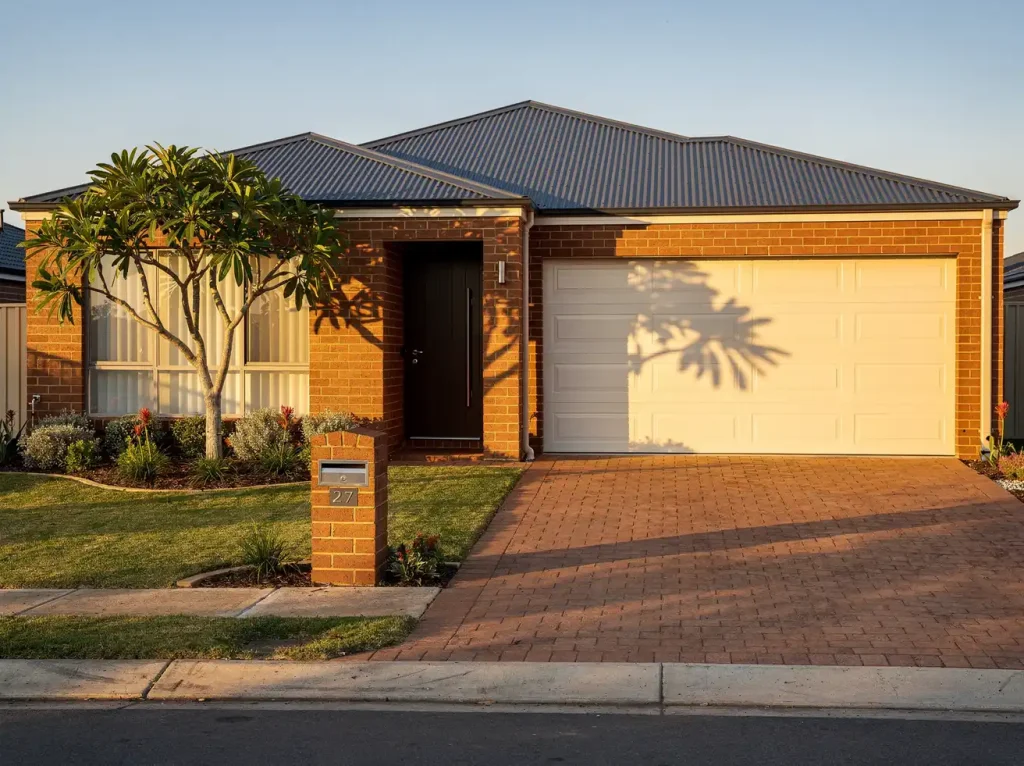
Perth summers run long and hot, and few homeowners stop to consider that their garage door is quietly enduring extreme thermal stress every single day. The garage door repair experts Perth homeowners call on regularly see wear that traces back not to a single fault, but to years of heat, UV exposure and temperature swings slowly breaking components down. Understanding that underlying cause helps you plan maintenance rather than wait for something to fail.
Prefer to watch or listen?
Listen onApple Podcasts
How Thermal Expansion Stresses Metal Components
Metal expands when it heats and contracts when it cools. On a typical Perth summer day, a garage sitting in full sun can swing through a huge temperature range between the early hours and the mid-afternoon peak.
That daily cycle forces tracks, springs, cables and fixings to expand and contract over and over. Each movement is tiny, but repeated thousands of times a year it works fasteners loose, shifts track alignment and adds micro-stress to metal that was engineered to a fixed tolerance.
Over several summers, this constant flexing contributes to the kind of gradual deterioration that many owners only spot once a part starts binding or rattling. It rarely announces itself early.
UV Exposure on Panels, Paint and Seals
Perth receives some of the highest UV levels in the country, and a west or north-facing garage door absorbs that radiation for hours at a time. Prolonged UV exposure breaks down more than just appearance.
- Paint and finishes fade, chalk and lose their protective layer, leaving the surface below more vulnerable.
- Door panels can warp or bow slightly as one side heats far more than the other.
- Weather seals and rubber gaskets dry out, harden and crack, so they no longer keep out dust, water and heat.
Once a seal perishes, the garage interior heats up faster, which in turn accelerates wear on everything inside it – including the opener.
Why Heat Dries Out Lubricants
Lubricants are what keep rollers, hinges, springs and tracks moving smoothly and quietly. High temperatures thin these lubricants out, and over time they dry, gum up or migrate away from where they are needed.
A dry moving part generates more friction, and friction means faster wear. Rollers grind, hinges stiffen and springs work harder than they should. This is a major reason a door that ran silently in winter can turn noisy and sluggish through summer.
In a hot climate, lubrication is not a set-and-forget task. It breaks down faster than most people expect, which is why refreshing it regularly matters more here than in cooler regions.
How Heat Affects Opener Electronics and Motors
A garage opener is essentially a small motor and a circuit board mounted in one of the hottest, least ventilated spaces in the home. Heat is hard on electronics.
Motors that run in high ambient temperatures can overheat during repeated cycles, tripping thermal cut-outs and shortening their working life. Circuit boards, capacitors and sensors also degrade faster when they sit in trapped heat day after day.
Photo-eye safety sensors can behave unpredictably in extreme conditions too, and lubrication that has dried out forces the motor to draw more power to move the door. The result is an opener that strains, stops mid-cycle or simply ages before its time.
Heat and the Spring Fatigue Cycle
Torsion and extension springs are among the hardest-working parts of any garage door, and they are also among the most affected by heat. Every open-and-close cycle loads and unloads the spring, gradually fatiguing the metal.
Thermal cycling adds to that fatigue. Combined with dried-out lubricant increasing the load on each cycle, heat can shorten the effective lifespan of a spring. Springs rarely fail without cause – they wear down over time, and Perth’s climate speeds that process up.
Because a failing spring is one of the more serious issues a door can develop, it is worth knowing the early warning signs that call for immediate attention before a component gives out completely.
Seasonal Maintenance Habits for the Perth Climate
You cannot change Perth’s weather, but you can reduce how much it wears your door. A few consistent habits go a long way.
- Refresh lubrication on rollers, hinges, tracks and springs more often than you would in a cooler climate, especially heading into summer.
- Inspect weather seals and rubber gaskets for cracking or hardening, and replace them when they no longer sit flush.
- Check fasteners and track alignment after long hot spells, when thermal movement is most likely to have loosened things.
- Keep the door surface clean and consider how much direct sun it takes, since a faded or bowing panel is often the first visible clue.
- Listen for new noise or sluggishness during hot weather and treat it as an early signal rather than background nuisance.
Improving ventilation or shading the garage where practical also helps, because a cooler garage protects the opener and lubricant far more than most people realise.
Planning Ahead Instead of Reacting
Perth’s climate places unique, ongoing stress on garage door components. Thermal expansion loosens metal, UV degrades panels and seals, heat dries out lubricants, and both springs and opener electronics fatigue faster than they would elsewhere.
Recognising these effects lets you shift from reactive repairs to proactive care. If your door shows any signs of heat-related wear, having the affected components inspected by a professional is the surest way to catch small problems before a hot Perth summer turns them into a failure.